Jaco Surf Photography: Your Insider’s Guide to Snapping Epic Waves (and Avoiding Sunburn)
Let’s be honest: you’ve scrolled past a thousand generic beach sunset photos, but there’s something about a perfectly captured barrel or a surfer launching off a glassy wave that stops the thumb mid-swipe. Jaco Beach isn’t just Costa Rica’s surf town—it’s a photographer’s dream where consistent swells, dramatic Pacific light, and year-round action create opportunities most coastal spots can only dream about. Whether you’re packing a professional rig or just want to elevate your iPhone game beyond basic beach snapshots, this guide will help you capture Jaco’s surf scene like someone who actually knows where the sandbars shift and when the light gets good. No fluff, no generic “golden hour” advice you’ve heard a million times—just the real intel on making your surf photography here actually worth the sunscreen you’ll slather on.
Why Jaco’s Waves Are Your Next Photography Muse (and How to Find Them)
Jaco’s beach breaks don’t take days off. Unlike some temperamental point breaks that only work with specific swells and tides, this stretch of Pacific coastline delivers consistent, photogenic waves year-round. That reliability means you’re not gambling on conditions—you’re planning around them, which is the difference between coming home with memory cards full of magic or just mediocre whitewash shots.
Here’s what makes Jaco special for surf photography: the beach faces almost directly west, giving you that coveted side-lighting throughout the day instead of harsh backlighting. The waves break close enough to shore that you don’t need a 600mm lens to fill your frame with action, yet far enough out that you get clean faces and spray without constant paddle-outs interrupting your shot. Different tides completely transform your canvas—high tide brings punchier, closer breaks perfect for telephoto action shots right from the sand, where you can practically count the water droplets in mid-air spray. Low tide exposes more beach, creating opportunities for wide landscape compositions with surfers positioned as dynamic elements against Jaco’s jungle-backed coastline.
The consistency also means local surfers know their spots intimately. Chat with anyone carrying a board, and they’ll tell you exactly where the sand shifts week to week, which section goes off during certain swells, and where beginners cluster (hint: avoid shooting there unless you want photos of people falling). This knowledge becomes your photography location scout. When someone mentions “the rivermouth is firing,” you know exactly where to point your lens.
Choosing Your Vantage Point: Beyond the Beach Blanket
Planting yourself randomly on the sand and hoping for good angles is amateur hour. Jaco’s geography offers distinct vantage points, each with its own photographic personality—you just need to know where to position yourself based on what you’re after.
For that iconic, sweeping view of the entire Jaco bay that makes viewers feel the scope of this surf town, hike up to El Miro at the south end. Yes, it’s a sweaty trek in tropical heat, and yes, you’ll question your life choices halfway up, but the panoramic reward is absolutely worth it. From up there, you can capture morning glory shots with the entire beach layout visible, surfers dotting the lineup like punctuation marks in a story written in waves. The elevation gives you compression that makes the waves look bigger and the jungle backdrop more dramatic. Pack light—just one versatile lens—because you’ll be huffing it uphill. Want more details on that hike? Discover more about the El Miro hike before you commit.
Down at beach level, the north end near the rivermouth offers something completely different. The sandbars at lower tides create textured foregrounds that add depth to your compositions, and the changing river flow patterns mean the landscape literally shifts daily. This spot works brilliantly for environmental portraits of surfers walking to or from the water, with the river, beach, and jungle all layered behind them.
Feeling adventurous and aquatically confident? Shooting from the water with a GoPro or waterproof housing puts you in the action, but only attempt this if you’re a genuinely strong swimmer and aware of the lineup etiquette. No surfer wants a photographer bobbing in their landing zone, and trust me, a fiberglass fin to the face will ruin both your day and your shot. Stay wide of the main break, use a float strap on your housing, and respect that the surfers have right of way—always.
Staying at Jaco Beach Zen gives you a strategic advantage here: you can test multiple vantage points throughout your stay without burning daylight on transportation. Hit the north end at sunrise, scout El Miro for sunset angles, and actually enjoy the photography process instead of stressing about logistics.
Gear Up: What to Pack for Your Jaco Photography Expedition
You don’t need a mortgage-sized camera budget to shoot great surf photos in Jaco, but you do need the right tools for the environment. Salt air, tropical humidity, and relentless sun will test your gear differently than your hometown beach.
A solid telephoto lens—think 70-200mm at minimum, ideally with some reach beyond that—is your most critical piece. This range lets you capture crisp action shots from the safety of dry sand, filling your frame with a surfer’s expression, the wave’s texture, and that decisive moment of spray without getting soaked. If you’re shooting crop sensor, a 55-200mm will get you there. Full-frame shooters might want that extra reach to 300mm for tighter compositions. The key is sharpness and decent autofocus speed—surf photography happens fast, and you can’t ask the wave to break again.
Waterproof protection isn’t optional, it’s insurance. Even if you never wade into the water, Jaco’s salt spray travels on the breeze and will coat your gear faster than you’d expect. For DSLR or mirrorless shooters staying on the beach, a simple rain sleeve costs $20 and saves thousands in corrosion damage. Planning water shots? Invest in proper water housing rated for the depth you’ll actually be at, because “splash-proof” and “salt-water-proof” are very different promises.
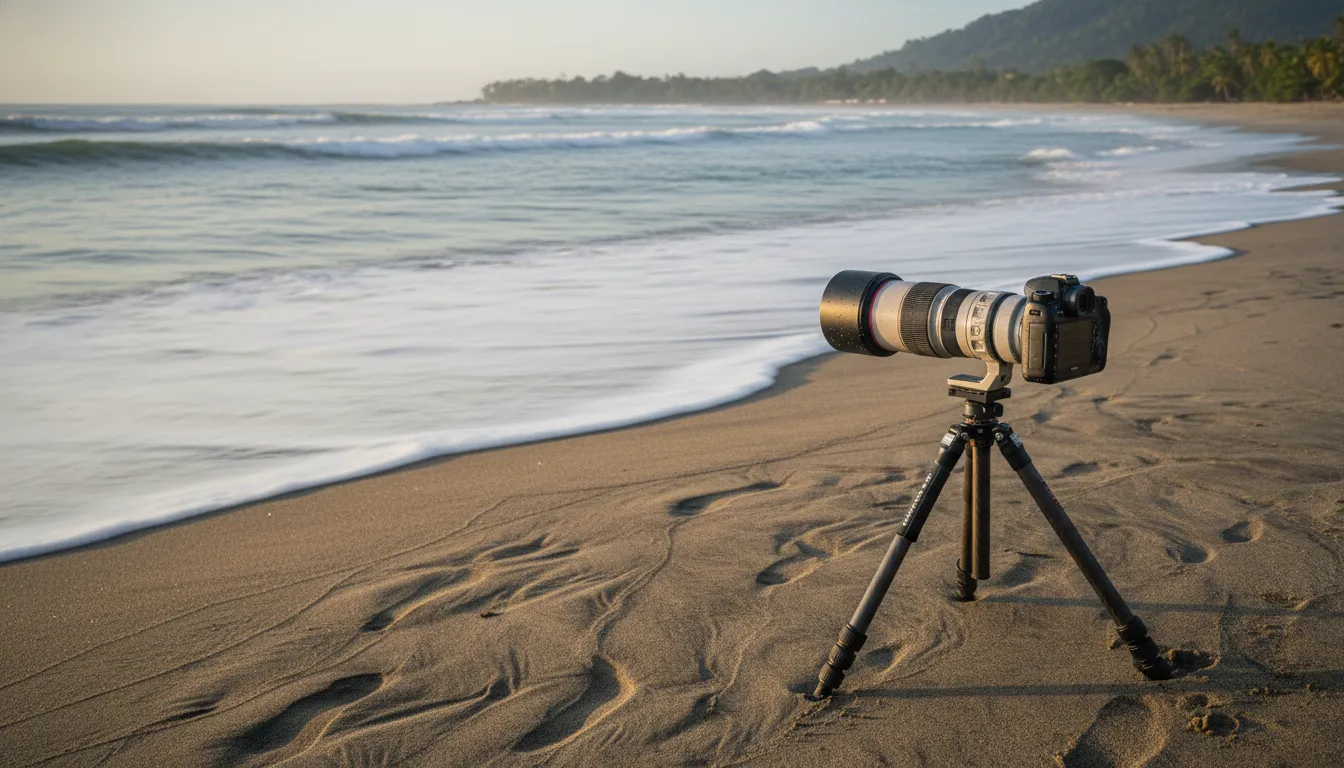
Don’t overlook the small stuff that tropical shooting demands: a sturdy tripod for dawn and dusk long exposures (because that low-light magic requires stability), plenty of spare batteries (heat drains them shockingly fast—budget double what you’d normally pack), a microfiber cloth that lives in your pocket for constant lens smudges, and a simple dry bag for between shots. Silica gel packets in your camera bag help fight humidity. UV filters protect your front element from spray. These aren’t luxury items; they’re the difference between functioning gear and expensive paperweights by day three.
Curious what else the veterans pack? Check out our essential packing list for Jaco for the full breakdown beyond just camera gear.
Timing is Everything: Chasing the Golden Hour (and the Best Swells)
Every photographer knows about golden hour, but in Jaco, sunrise specifically offers something sunset can’t match: clean conditions and empty lineups. Dawn patrol at Jaco Beach delivers softer, directional light that sculpts the waves instead of flattening them, fewer people cluttering your compositions, and generally glassier water before the afternoon onshore winds texture everything. The bonus? You’ll finish shooting and be back for breakfast at your rental while other photographers are still setting up their afternoon gear.
Tides matter more than most photographers realize. Incoming tides push waves closer to shore, creating consistent sets and making it easier to fill your frame with surf action from a beach position. The water’s also typically cleaner on incoming tides at Jaco. Outgoing tides can create interesting drama with exposed rocks and sandbars, but the waves often back off or get wonky. Check the tide charts like the locals do—they’re not just for surfers.
Swell forecasts are your secret weapon for planning epic photo sessions instead of mediocre ones. Bigger swells mean more dramatic shots, more powerful spray, and surfers pushing their limits in ways that translate to compelling images. But big also means challenging—both for surfers and photographers trying to track fast-moving subjects. Medium swells around 3-5 feet often hit the sweet spot: photogenic without being chaotic. Local surf shops and our guide to Jaco’s best surf breaks will help you decode what conditions mean for photography opportunities.
Staying at Jaco Beach Zen makes sunrise missions ridiculously easy. Wake up, grab your gear, walk straight to the beach while the light’s perfect, then return to your own space for coffee and editing instead of hunting for an overpriced café. That convenience isn’t just comfort—it’s the difference between actually capturing dawn patrol and sleeping through it.
Post-Production Pura Vida: Editing Your Jaco Masterpieces
Capturing the shot is only half the battle—your editing approach either honors what makes Jaco special or turns it into generic tropical mush that could be anywhere. The good news: Jaco’s natural palette makes your editing job easier if you work with it instead of against it.
Embrace the vibrant colors, because they’re real. Jaco’s sunsets genuinely glow in oranges and magentas that would look oversaturated anywhere else but here are just Tuesday. The jungle backdrop is actually that green, the water shifts from deep blue to turquoise depending on depth and light, and the contrast between all these elements creates naturally punchy images. A touch of saturation boost is fine—even expected—but keep it believable. Nobody wants neon green waves or surfers with Oompa Loompa skin tones. The “does this look like a place I’d actually visit” test works wonders.
Crop tightly for impactful action shots, especially with telephoto work. That 20-megapixel file gives you room to punch in on a surfer’s focused expression or isolate the exact moment of spray without losing quality. Don’t feel obligated to show the entire wave and beach in every shot—sometimes the story lives in a tight frame of texture, motion, and human determination. Conversely, your wide landscape shots should breathe, using negative space and environmental context to show scale.
Contrast and clarity adjustments help define water texture and separate your subject from the background, but easy on the clarity slider—oversharpen and your images look digital and harsh instead of dynamic. A little goes a long way. For dawn and dusk shots, careful exposure adjustments in shadows and highlights can recover details that seem lost in-camera, especially in those high-contrast situations where bright sky meets dark water.
Finding a Photo Pro (or Becoming One) in Jaco
You don’t have to figure this out alone. Jaco has a tight community of surf photographers who know these breaks better than most people know their commute, and many are happy to share knowledge or offer their services for visitors wanting professional shots of their surf sessions.
Local surf photographers like Adrian Lopez are often on the beach capturing the action for visiting surfers who want proof they actually stood up. These photographers know Jaco’s specific conditions intimately—which angles work best at which breaks, how the light plays differently across the bay throughout the day, and where to position for that magazine-worthy shot. Hiring a local pro for a session isn’t just about getting photos; it’s a masterclass in reading Jaco’s waves through a photographer’s eye. Watch where they set up, what they’re anticipating, and you’ll level up your own work.
Surf photography workshops in Jaco offer something unique for digital nomads and adventure seekers looking to add a marketable skill to their repertoire. Some local surf schools bundle surf instruction with photography coaching—you learn to read waves both as a rider and a shooter, understanding the mechanics from both perspectives. It’s part workation, part skill-building, entirely Jaco. These workshops typically cover water safety, camera protection, timing and anticipation, and the business side of surf photography if you’re considering turning passion into income.
The Jaco photographer community is surprisingly welcoming if you approach with genuine interest rather than competitive ego. Strike up conversations, ask questions, share your work for feedback. Most are stoked to see people caring about capturing the culture properly instead of just snapping and leaving. Want to combine photography with actually learning to surf? Learn more about Jaco’s surf schools and lessons that can help you understand waves from the inside out.
FAQ
What’s the absolute best time of day to capture surf photos at Jaco Beach with good light?
Sunrise wins for Jaco surf photography, hands down. You get softer, directional light between 5:45-7:00 AM that sculpts waves beautifully, cleaner water conditions before afternoon winds, and far fewer people in your frame. The side-lighting at dawn creates dimension and texture that harsh midday sun flattens completely. Early morning also means you can finish shooting and still have a full day ahead instead of waiting around for evening golden hour. Sunset works too—around 5:30-6:30 PM depending on season—but expect more crowded lineups and potentially windier conditions that texture the water surface.
Are there any specific safety considerations for photographing surfers in the water at Jaco?
Absolutely. First, only enter the water if you’re a genuinely strong swimmer—rip currents here are real and unforgiving. Wear a bright swim cap or rash guard so surfers can see you easily, and stay well clear of the active lineup; getting hit by a board or surfer is dangerous for everyone. Use a waterproof camera float strap so your gear doesn’t sink if you drop it. Never turn your back on the ocean—rogue sets come through. If you’re not confident in the water, telephoto lenses from the beach are safer and often produce better results anyway. Also, ask permission before shooting specific surfers; most are cool with it, but respect is currency here.
Can I rent professional camera gear in Jaco, or should I bring everything with me?
Bring your gear from home. Jaco doesn’t have professional camera rental shops like you’d find in San José, and what’s available locally tends toward basic tourist equipment rather than telephoto lenses and water housings. If you’re flying in specifically for surf photography, pack your essential lenses, spare batteries, and protection. Buying a waterproof housing here is possible but limited and expensive. The one exception: GoPros and action cameras are easier to find for rent through some surf shops if you just want casual water footage. Plan ahead, pack carefully, and bring backup solutions for critical gear.
Where can I find local surf photographers to hire or learn from in Jaco?
Local surf photographers regularly work the main beach breaks, especially at popular surf spots and surf schools. Adrian Lopez is one of the established names; you’ll often find him shooting at peak times. Ask at surf shops like Jaco Surf School or Tortuga Surf Camp—they either have in-house photographers or can connect you with locals. Social media works too; search “Jaco surf photography” on Instagram and you’ll find active shooters posting their work and contact info. Many offer both hire-for-a-session services and informal mentoring if you express genuine interest in learning their craft.
Is it safe to leave my gear on the beach while I wade into the water for a closer shot?
Never leave camera gear unattended on Jaco Beach, period. Theft happens, and expensive camera equipment is an easy target for opportunistic thieves. If you’re shooting alone and want water shots, either invest in a waterproof pack you can wear while swimming, or accept that you’re limited to dry-land photography. Better option: bring a trusted friend who stays with the gear while you wade in. Some photographers hire a local surf instructor or guide for the day specifically to watch equipment between shots. The cost is negligible compared to replacing a stolen camera body and lens.
Are there any regulations or permits needed for drone photography of surfing in Jaco?
Costa Rica requires drone registration and permits for commercial use, though enforcement varies. For personal recreational use, you technically need to register with DGAC (Dirección General de Aviación Civil) if your drone weighs over 250 grams. Jaco Beach itself doesn’t have specific no-fly zones, but you must stay below 400 feet, maintain line of sight, and avoid flying over crowds. The bigger issue: wind. Coastal breezes here can challenge smaller drones, especially in afternoon conditions. If you’re shooting commercially or planning to sell images, absolutely get proper permits—fines are steep. For casual fun, be respectful of people’s privacy and never fly directly over active surfers.
Bahía Azul, unit 7C sits right on this stretch of sand — on the quiet south end of Jacó, a few hundred feet from the water.
Book on Airbnb