Jaco’s Best Bites: A Local’s Guide to Dining Experiences (Beyond the Tourist Traps)
Let’s be honest: most beach town dining guides read like they were written by someone who spent exactly three hours Googling “best restaurants” before catching their flight home. Not this one. Jaco’s food scene is a delicious contradiction—a surf town where you can devour a $4 ‘casado’ that’ll fuel your entire day, then pivot to fresh-off-the-boat tuna that rivals anything you’d find in a proper food city. The secret? Knowing where the construction workers eat their lunch, which fishing dock the chefs visit at dawn, and why that unassuming corrugated-roof joint serves the best ‘gallo pinto’ you’ll ever taste. Whether you’re feeding a family on vacation, fueling remote work sessions, or simply chasing authentic flavors, Jaco’s culinary landscape rewards the curious. This isn’t about white tablecloths and overpriced sunset views (though we’ve got those too). This is about eating like you actually live here.
Unearthing the “Sodas”: Where Real Ticos Eat (and Should You?)
Forget linen tablecloths and overpriced ‘fusion’ menus. If you want to understand Costa Rican food culture, you need to understand ‘sodas.’ These bustling, no-frills eateries are where locals fuel up daily with massive, inexpensive, utterly authentic meals. The star player? The ‘casado’—a glorious plate piled with rice, beans, salad, fried plantains, and your choice of protein. It’s not Instagram-pretty, but it’s soul-satisfying in a way that’ll make you question why you ever paid $18 for a sad desk salad back home.
Soda Jaco Rústico deserves special mention. This cafeteria-style spot doesn’t look like much—you’ll probably stand in line with local construction workers and office staff—but that’s exactly the point. Their ‘arroz con pollo’ is legendary, and the ‘olla de carne’ (a hearty beef stew swimming with yuca, plantains, and vegetables) could convince a vegetarian to reconsider. Feeling adventurous? Try the ‘lengua de res’ (beef tongue stew). I know, I know—but trust me, it’s surprisingly tender and flavorful.
For families, sodas are goldmines. They’re typically clean, safe, genuinely welcoming to kids, and mercifully quick. No waiting thirty minutes for chicken fingers while your toddler dismantles the sugar packets. Service is efficient, portions are generous enough to share, and you’ll spend less than you would at a fast-food chain—while eating infinitely better food.
Digital nomads, take note: most sodas offer lightning-fast service, making them perfect for a proper lunch break between Zoom calls. Just don’t expect blazing Wi-Fi or a co-working vibe. This is fuel, pure and simple, served with a smile and often accompanied by the comforting chaos of local life happening all around you.
From Pacific to Plate: Jaco’s Seafood Scene (It’s More Than Just Fish)
Jaco doesn’t just sit beside the Pacific Ocean—we practically live in it. This geography delivers a constant supply of absurdly fresh seafood that’ll ruin you for landlocked dining forever. Think ‘ceviche’ so vibrant and lime-kissed it practically vibrates on your tongue. Whole fried snapper with eyes that were probably seeing underwater this morning. Octopus grilled to smoky perfection. This is what happens when fishing boats dock minutes from restaurant kitchens.
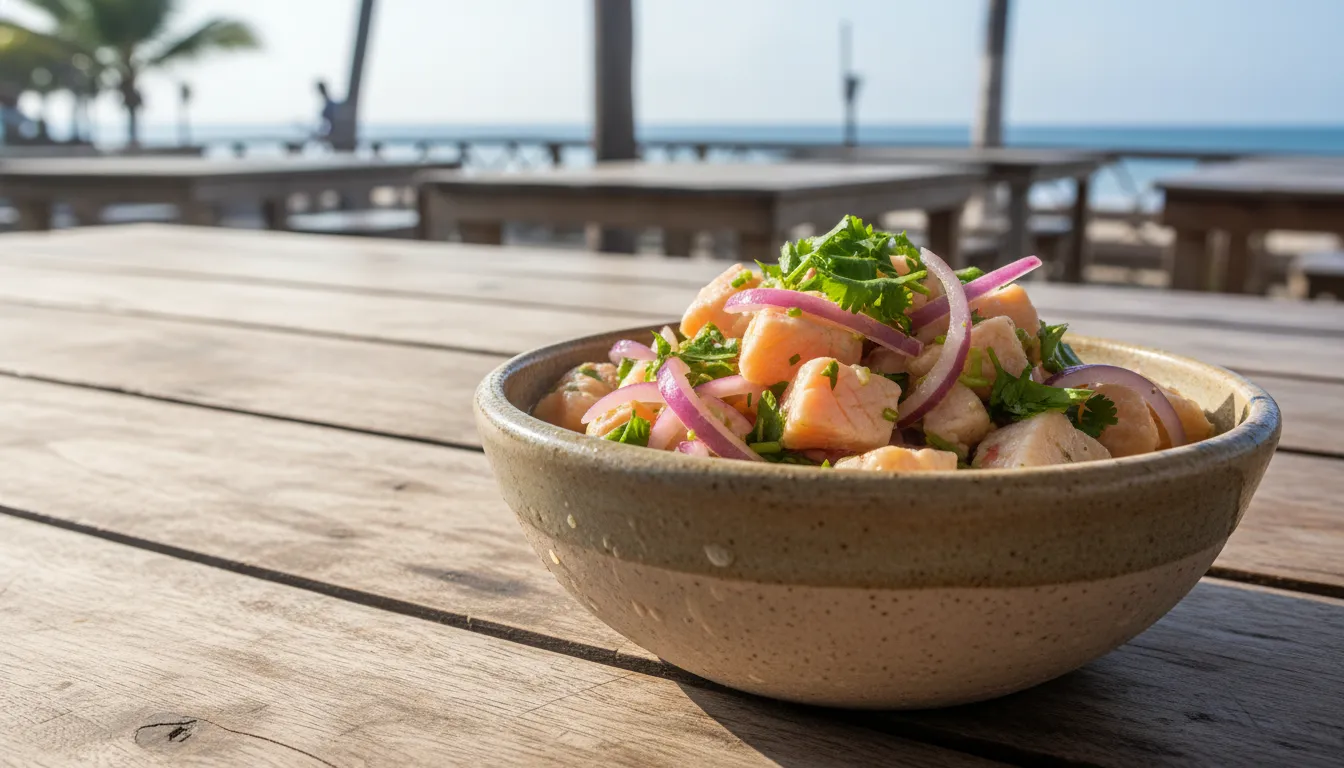
The local ‘ceviche’ deserves its own paragraph. Made with mahi-mahi or snapper caught that morning, marinated in fresh lime juice with cilantro, red onion, and sometimes a kick of local chilies, it’s light, zesty, and the perfect antidote to Jaco’s tropical heat. Every restaurant has their own recipe, and honestly? Most of them are excellent.
Here’s a local secret: head to the Herradura fishing dock early in the morning—we’re talking 6 or 7 AM. You can buy fish straight off the boats, just like the restaurant chefs do. Imagine grilling that gorgeous fillet on your vacation rental’s BBQ later that evening, knowing it was swimming in the Pacific just hours earlier. That’s the kind of fresh we’re talking about.
Ohana Sushi Tapas Bar has earned acclaim for marrying local catches with Japanese precision. It’s a step up in price and ambiance, but the innovative flavor combinations and ocean views justify the splurge. Their sushi-grade tuna often comes from the same waters you surfed in that morning—a thought that never gets old.
Sea Salt brings beachfront dining with serious flavor. Their fish tacos strike that perfect balance between casual and craveable, while the Caribbean-influenced seafood dishes served with crispy ‘patacones’ (twice-fried plantain patties) showcase how Jaco’s culinary scene draws from multiple traditions. The Mediterranean ceviche is a standout—proof that sometimes the best dishes happen when cultures collide in the kitchen.
Beyond the ‘Casado’: Exploring Traditional Costa Rican Meals All Day Long
While the ‘casado’ dominates the lunch conversation, traditional Tico eating is an all-day affair worth exploring from sunrise to sunset. Costa Rican food culture celebrates hearty, straightforward flavors that fuel active lives—which makes perfect sense when you’re surrounded by surf, jungle hikes, and general adventure.
Breakfast here means ‘Gallo Pinto’—the national dish of rice and beans mixed with Lizano sauce (a slightly sweet, tangy condiment that Ticos put on everything), typically served with scrambled or fried eggs, sour cream, and fried plantains. It’s protein-rich, surprisingly light despite how it sounds, and exactly what you need before a morning surf session or an intense remote work sprint. Once you’ve had proper ‘gallo pinto,’ hotel continental breakfasts will seem like a cruel joke.
For snacks and sweets, keep your eyes open for ‘empanadas’ (savory pastries filled with cheese, beans, or meat), ‘chifrijo’ (a genius layered dish of rice, beans, crispy pork, and fresh pico de gallo served in a bowl), and the dangerously addictive ‘tres leches’ cake. This sponge cake soaked in three types of milk shouldn’t work as well as it does, but Costa Rican bakeries have perfected the art of making it light, sweet, and impossible to stop eating.
Traditional Costa Rican food isn’t complicated or fussy. It’s honest cooking that respects good ingredients and understands that sometimes the best meals are the simplest ones, executed well.
From Field to Fork: Jaco’s Farm-to-Table Experience
Jaco might define itself as a beach town, but we’re surrounded by incredibly fertile land. The same volcanic soil and tropical climate that grows world-class coffee also produces vibrant vegetables, exotic fruits, and pasture-raised proteins. A growing number of restaurants are tapping into this abundance, offering farm-to-table experiences where “local” isn’t marketing speak—it’s geography.
Choosing farm-to-table here means dishes where you can genuinely taste the difference. Tomatoes that actually taste like tomatoes. Leafy greens picked that morning, still crisp and mineral-rich. Free-range chicken that spent its life scratching around actual farms, not industrial lots. The flavors are brighter, more alive, because the journey from soil to plate measured in hours, not weeks.
Look for menus that highlight seasonal ingredients and name their supplier farms. These restaurants often demonstrate deeper commitments to sustainability, supporting local agriculture while offering more sophisticated interpretations of Costa Rican cuisine. You’re not just eating well—you’re participating in a food system that benefits the community.
The farm-to-table movement in Jaco represents the evolution of our dining scene. It respects traditional flavors while embracing modern techniques and environmental consciousness. For wellness-focused travelers and digital nomads who care about what they’re putting in their bodies, these establishments offer the best of both worlds: authenticity and intentionality.
Jaco After Dark: Dining & Nightlife
When the sun drops into the Pacific, Jaco transforms. The dining scene shifts gears from casual beach fuel to something more atmospheric, with options ranging from romantic oceanfront dinners to lively bars serving surprisingly good food alongside craft cocktails and local beer.
Many restaurants offer open-air dining where the soundtrack is crashing waves and the occasional howler monkey commentary from nearby trees. There’s something magical about eating fresh grilled fish while warm ocean breezes keep you comfortable and stars emerge overhead. This is vacation dining at its finest—relaxed, sensory, utterly unpretentious.
A word about safety, because it matters: Jaco’s nightlife is vibrant and generally safe, especially around the main tourist corridors. That said, use common sense. Stick to well-lit areas when walking at night, be aware of your surroundings, and don’t hesitate to take a taxi if you’re venturing further from the main strip or have been enjoying a few cocktails. The town is small enough that taxi rides are cheap and quick.
For digital nomads, several evening establishments offer more sophisticated ambiance than daytime sodas, often with reliable Wi-Fi that makes them suitable for working dinners or casual networking. Some of the best professional connections happen over good food and local beer, after all.
Being a short, safe walk from many dining options—or a quick, inexpensive taxi ride from virtually anywhere in town—means you can experience Jaco’s evening energy without the stress of navigation or safety concerns. Close enough to be convenient, far enough to feel like an adventure.
Frequently Asked Questions
What are the must-try traditional Costa Rican dishes in Jaco for first-timers?
Start with the ‘casado’ at any reputable soda for a complete introduction to Tico flavors. Follow up with fresh ‘ceviche’ from a seafood spot, ‘gallo pinto’ for breakfast, and ‘chifrijo’ as a snack. Don’t skip ‘patacones’ (fried plantains) or ‘tres leches’ cake. These dishes represent the foundation of Costa Rican cuisine and appear on menus throughout Jaco. Most importantly, try Lizano sauce—it’s the tangy-sweet condiment that Ticos put on everything, and once you taste it, you’ll understand why.
Are there kid-friendly dining options and restaurants with high chairs in Jaco?
Absolutely. Sodas are exceptionally family-friendly, with quick service and large portions that are easy to share. Most established restaurants in the main tourist areas have high chairs and are accustomed to families. Costa Rican culture is incredibly welcoming to children, so you’ll rarely encounter the stiff formality that makes dining with kids stressful. Simple dishes like rice, beans, grilled chicken, and fresh fruit are available everywhere. The casual beach-town vibe means no one blinks when toddlers get a little loud or messy.
Where can I find vegetarian, vegan, or gluten-free food options in Jaco Beach?
Jaco’s growing health-conscious community means increasing options for dietary restrictions. Many restaurants now mark vegetarian and vegan items clearly. Traditional ‘gallo pinto’ is often vegan, and ‘casados’ can be ordered with beans or eggs instead of meat. Several cafes and juice bars cater specifically to plant-based diets. For gluten-free, communicate clearly with servers—many traditional dishes are naturally gluten-free (rice, beans, fresh fish, fruits), but cross-contamination awareness varies. The farm-to-table establishments tend to be most accommodating and knowledgeable about dietary needs.
Is it safe to drink the tap water in Jaco restaurants, or should I stick to bottled?
Jaco’s tap water is generally considered safe for locals, but many tourists experience digestive adjustments due to different mineral content and bacteria. Most restaurants serve purified or bottled water automatically. If you’re unsure, always ask for “agua purificada” or bottled water. Ice in established restaurants is typically made from purified water, but if you’re particularly sensitive, you can request drinks without ice (“sin hielo”). This isn’t about the water being contaminated—it’s about your system adapting to different microbial environments.
What’s the typical cost of a meal at a ‘soda’ versus a more upscale restaurant?
A generous ‘casado’ at a soda runs between $4-7 USD, including a drink. You’ll be genuinely full. Mid-range restaurants charge $10-18 for entrees, while upscale beachfront establishments with imported ingredients and craft cocktails run $20-35 per entree. Fresh seafood dishes typically cost more than chicken or beef. Beer is affordable everywhere ($2-4), and local ingredients always cost less than imported ones. Two people can eat extremely well at a soda for under $15, or splurge on a nice dinner for $60-80 including drinks.
Are reservations necessary for popular restaurants, especially during peak season?
During high season (December through April) and major holidays, reservations are smart for upscale restaurants, especially for dinner. Popular spots like Ohana and Sea Salt can fill up, particularly on weekends. Sodas and casual eateries don’t take reservations—just show up. If you have specific timing needs or a larger group, calling ahead is always wise. Many restaurants have WhatsApp numbers for easy reservation. The shoulder seasons and low season offer much more flexibility, and you can usually walk into most places without issues.
Can I find restaurants with good Wi-Fi perfect for digital nomads in Jaco?
Many cafes and mid-range restaurants offer reliable Wi-Fi, making them suitable for laptop work during slower hours. However, dedicated co-working spaces provide more consistent connectivity than restaurants. For a working lunch, several spots along the main strip have good enough Wi-Fi for emails and light work, though don’t expect fiber-optic speeds. Evenings, some upscale restaurants maintain solid connections. The key is asking about Wi-Fi before settling in for an extended work session, and being respectful about lingering during busy meal times.
How do I choose a safe and authentic street food vendor in Jaco?
Look for vendors with steady local customer flow—if Ticos are eating there regularly, it’s a good sign. The food should be cooked fresh in front of you, not sitting out. High turnover means fresher ingredients. Vendors near the beach and main tourist areas maintain higher standards due to visibility. Trust your instincts: if something looks or smells off, move on. Most street food in Jaco is safe, delicious, and incredibly affordable. ‘Empanadas,’ fresh fruit cups, and grilled items are usually safe bets. Start conservatively and let your digestive system adjust before going wild.
Bahía Azul, unit 7C sits right on this stretch of sand — on the quiet south end of Jacó, a few hundred feet from the water.
Book on Airbnb