Beyond the Surf: Unearthing Jaco’s Hidden Eco-Lodges & Sustainable Stays
Think “eco-lodge” and your mind probably conjures images of candlelit cabins three hours down a dirt road, where your only neighbors are sloths and the Wi-Fi is purely theoretical. But here’s Jaco’s delightful contradiction: you can absolutely sleep in a place where toucans critique your morning coffee while still being close enough to wander downtown for fish tacos when the mood strikes. These aren’t the kind of eco-lodges that require a machete and a spirit of adventure just to reach breakfast—they’re thoughtfully positioned retreats where sustainability meets accessibility, proving that “green” doesn’t have to mean “good luck finding cell service.” Whether you’re a family seeking wildlife encounters without completely abandoning civilization, a digital nomad who needs both howler monkey soundtracks and reliable bandwidth, or a surfer looking to minimize your footprint while maximizing your wave count, Jaco’s eco-conscious accommodations offer something genuinely different from the typical Costa Rican remote-jungle experience.
Jaco’s Green Secret: Eco-Lodges Just Beyond the Buzz
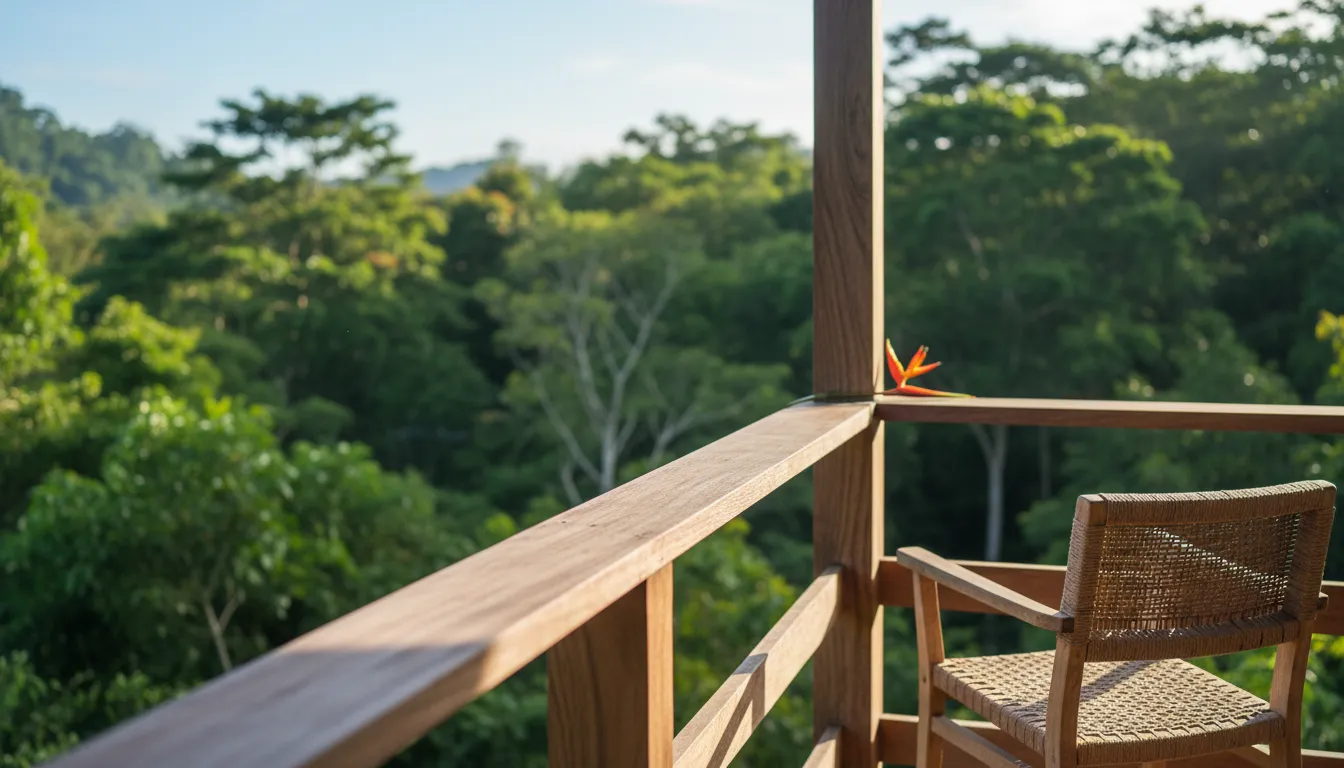
Jaco central pulses with surf shops, beachfront bars, and that particular energy that comes from a town built around good waves and better times. But drive just ten to fifteen minutes in almost any direction, and you’ll find yourself swallowed by jungle canopy so thick it feels like stepping through a green curtain into another world entirely. These aren’t distant mountain retreats that require half a day’s travel—they’re genuine nature immersions positioned with almost suspicious convenience.
The beauty of this setup is frankly brilliant. You wake to white-faced capuchins raiding the mango trees outside your bungalow, breakfast to the soundtrack of at least three species of birds you can’t identify (yet), and still make it to Jaco Beach for a 9 AM surf session without breaking a sweat. Properties like Hotel DoceLunas have mastered this balance, maintaining expansive gardens where the wildlife clearly didn’t get the memo about humans moving in, while keeping you just a short hop from town amenities.
This proximity matters more than you might think. It means your eco-adventure doesn’t require complete self-sufficiency or a degree in wilderness survival. Forgot sunscreen? Need a proper lunch? Want to explore Jaco’s downtown scene after a morning communing with nature? It’s all there, close enough to be convenient, far enough that you genuinely feel like you’ve escaped. Think of it as nature with a safety net—or perhaps more accurately, as civilization with a really impressive nature buffer.
What ‘Eco’ Really Means Here: Beyond the Brochure Buzzwords
Let’s address the elephant in the room—or rather, the lack of elephants in rooms claiming to be eco-friendly. The term “eco-lodge” gets slapped on everything from genuinely sustainable operations to places that simply haven’t updated their décor since the ’90s and are calling it “rustic charm.” In Jaco’s case, authentic sustainability often shows up in surprisingly specific ways.
Take Hotel DoceLunas as your benchmark. They’ve left significant portions of their property intentionally wild, creating genuine habitat corridors rather than manicured lawns. Their gardens aren’t just pretty—they’re actively functioning ecosystems where native plants support native wildlife. This isn’t decorative jungle; it’s the real thing, preserved with intention. Solar water heating, thoughtful waste management systems, and community partnerships that extend beyond token gestures round out their commitment.
Here’s where it gets interesting: even larger establishments like Croc’s Resort have implemented surprisingly meaningful initiatives. Their turtle-friendly lighting along the beachfront during nesting season demonstrates that “eco” can emerge from unexpected corners. It’s not always the small, rustic cabin that’s making the biggest difference—sometimes it’s the mid-size resort that decided to actually care about its environmental impact.
When evaluating any property’s green credentials, look past the bamboo furniture and the recycling bins in common areas. Ask about water systems, energy sources, land preservation, and community involvement. The places doing it right won’t just tell you they’re eco-friendly—they’ll show you exactly how, often with a level of detail that borders on enthusiastic oversharing.
Surf, Sleep, Sustain: Finding Your Eco-Friendly Wave-Catching Home
Surfers face a particular challenge when seeking sustainable accommodations: the best waves and the best eco-lodges don’t always overlap geographically. Jaco’s proximity to multiple surf breaks—from Jaco Beach itself to nearby Playa Hermosa—means you’re working with better odds than usual, but you’ll still need to think strategically about location versus impact.
Many smaller operations near Playa Hermosa, about ten minutes south, offer that sweet spot between wave access and environmental consciousness. These aren’t necessarily advertising themselves as “eco-lodges” in bold letters, but they’re built with natural harmony clearly in mind—simple construction using local materials, minimal site disruption, designs that work with rather than against the landscape. You’ll find boutique B&Bs and surf camps where the focus is less on luxury amenities and more on not mucking up the beautiful setting they’re privileged to occupy.
The typical “eco-friendly surf camp” in this area translates to well-maintained bungalows or cabins set in jungle gardens, often with outdoor showers that somehow feel more refreshing than any marble bathroom could manage. Solar panels might heat your water, composting might handle waste, and the surfboard storage definitely prioritizes function over flash. After a solid day getting worked by Pacific swells, collapsing into a hammock surrounded by evening bird calls feels infinitely more restorative than any resort spa treatment.
For wave-chasers seeking genuine sustainability, consider that your footprint extends beyond where you sleep. Choosing accommodations within biking or easy driving distance of multiple breaks, supporting local surf shops, and opting for places that manage their resources thoughtfully all contribute to a more responsible surf trip.
Budget-Friendly Green: Making Your Eco-Conscious Stay Affordable
Here’s a truth that often gets overlooked in conversations about sustainable travel: genuine eco-friendly accommodations can actually cost less than their conventional counterparts. The rustic cabin-style lodgings scattered through Jaco’s outskirts weren’t necessarily designed with environmentalism as the primary goal, but their simple construction and minimal resource demands create a naturally lower impact—and often a smaller price tag.
Hostels and smaller guesthouses positioned away from Jaco’s main tourist strip frequently embody sustainability almost by default. They’re using less electricity because there’s no massive air conditioning system. They’re generating less waste because breakfast is fresh fruit from local markets rather than individually wrapped continental offerings. The grounds require minimal maintenance because they’ve largely been left in their natural state. All of this translates to lower operating costs, which often means lower rates for guests.
When you’re budget-conscious and environmentally aware, start your search by looking at accommodations that emphasize natural settings over extravagant amenities. A fan instead of air conditioning, screens instead of sealed windows, simple furniture instead of imported luxury—these aren’t sacrifices, they’re features. You’re paying less and impacting less, which feels like winning on both counts.
The most sustainable choice is frequently the one that requires fewer resources from the outset. In Jaco, this philosophy aligns beautifully with budget travel. Those charming but basic bungalows a kilometer or two from the beach action? They’re often your best bet for combining affordability with genuine environmental responsibility, even if they’re not marketing themselves as eco-lodges.
Work & Play, the Green Way: Digital Nomad Eco-Retreats
Digital nomads have created an entirely new category of travel accommodation needs: reliable Wi-Fi with a side of paradise, productive workspaces that don’t feel like cubicles, and the flexibility to switch between focused work sessions and spontaneous adventures. Eco-lodges near Jaco deliver this combination with surprising effectiveness.
The best spots for remote workers blend serious infrastructure—think fiber optic internet and comfortable workspaces with actual ergonomic considerations—with the kind of natural surroundings that make you remember why you chose this lifestyle in the first place. Taking a video call with scarlet macaws providing the background entertainment definitely beats fluorescent office lighting. The mental reset that comes from being able to step away from your laptop directly into jungle trails or down to the beach cannot be overstated for maintaining productivity over weeks or months.
These properties often attract communities of like-minded individuals—other digital nomads, long-term travelers, people who’ve figured out how to blend work with actually living. Shared dinners turn into networking opportunities. Sunset surf sessions become team-building exercises for your remote, international, completely informal crew. You might find informal co-working spaces with jungle views where the dress code tops out at “wearing a shirt is appreciated but optional.”
For remote workers, the rhythm of a Jaco eco-lodge makes practical sense: deep focus work during morning hours when the property is quiet, midday breaks that might involve surfing or hiking, afternoon sessions powered by strong coffee and ocean breezes, evenings spent watching wildlife from your balcony while catching up on emails. It’s productivity that actually feels sustainable long-term, both for the planet and for your mental health.
FAQ
Are there actual certified eco-lodges directly in Jaco Beach town?
Jaco Beach town proper focuses more on surf-centric hotels and beachfront accommodations rather than certified eco-lodges. The genuinely eco-focused properties typically sit just outside town—usually 10-20 minutes away—where maintaining natural habitat and sustainable practices is more feasible. This positioning actually works in your favor: you get authentic nature immersion while keeping easy access to Jaco’s restaurants, surf breaks, and amenities. Think of the town as your convenient base of operations while your actual sleeping quarters lean green. For true certification, you’re looking at properties in the surrounding hills and jungle areas rather than the beachfront strip.
What’s the difference between an ‘eco-lodge’ and a ‘sustainable hotel’ in the Jaco area?
The distinction often comes down to scale and immersion rather than hard definitions. Eco-lodges typically maintain smaller footprints—both literally and environmentally—with accommodations integrated into natural settings and significant land preservation. They emphasize wildlife habitat and minimal environmental disruption. Sustainable hotels might be larger operations implementing green practices like solar power, water conservation, and waste management but within a more conventional hotel framework. Both can be genuinely committed to sustainability; eco-lodges just tend toward that authentic jungle-retreat experience while sustainable hotels offer eco-consciousness with more traditional amenities. Look at specific practices rather than labels when deciding what fits your values and comfort level.
Can I really see wildlife like monkeys and exotic birds from a Jaco eco-lodge?
Absolutely, and “from” might undersell it—you’ll likely see them from your bed if you leave windows open. Properties like Hotel DoceLunas maintain substantial gardens and preserved forest areas where white-faced capuchins, howler monkeys, various toucan species, scarlet macaws, and countless other birds go about their daily business largely unbothered by human presence. Morning wildlife viewing often requires nothing more strenuous than sitting on your balcony with coffee. The key is choosing accommodations that have genuinely preserved natural habitat rather than cleared everything for manicured grounds. Staying just outside Jaco’s town center dramatically increases your wildlife encounter odds while keeping you close enough for easy beach access.
Do eco-friendly accommodations in Jaco usually offer surfboard rentals or lessons?
This varies significantly by property. Some eco-lodges and sustainable accommodations near Jaco have partnered with local surf shops or offer their own board rentals and lesson arrangements, while others focus purely on the nature-immersion experience and leave surf logistics to you. Properties closer to Playa Hermosa often cater more directly to surfers with on-site board storage and rental options. Your best approach is asking specifically about surf amenities when booking—many places will happily connect you with trusted local instructors or rental shops even if they don’t offer services directly. The eco-friendly aspect doesn’t typically impact surf access; you’re just coordinating through slightly different channels than a surf-specific resort.
How can I tell if an eco-lodge is genuinely sustainable or just greenwashing?
Look for specific, verifiable practices rather than vague environmental claims. Genuine eco-lodges will detail their water systems, energy sources, waste management approaches, and land preservation efforts with surprising specificity—they’re typically proud of these initiatives and eager to explain them. Check for community involvement programs that go beyond token gestures, certifications from recognized environmental organizations, and long-term habitat preservation commitments. Properties serious about sustainability often maintain portions of their land as wildlife corridors or protected areas. Ask direct questions about their practices; greenwashing operations tend toward marketing buzzwords while authentic places offer concrete details about solar panels, composting systems, or turtle-friendly lighting. Online reviews mentioning specific environmental features also help verify claims.
Are eco-lodges in Jaco a good option for families with young children, safety-wise?
Yes, with proper consideration of your specific comfort level and children’s ages. Jaco-area eco-lodges aren’t remote wilderness requiring survival skills—they’re accessible properties with maintained grounds and typical safety measures. The advantage for families is that wildlife encounters happen within controlled settings rather than requiring jungle hikes that might challenge small legs. Properties maintain safe structures, provide secure accommodations, and staff who understand family needs. However, “nature immersion” does mean your kids might encounter insects, curious monkeys, or unfamiliar sounds that could worry very young children. Most families find this educational and exciting rather than concerning. The proximity to Jaco town means medical facilities, pharmacies, and familiar amenities remain easily accessible, providing peace of mind that truly remote eco-lodges can’t offer.
Bahía Azul, unit 7C sits right on this stretch of sand — on the quiet south end of Jacó, a few hundred feet from the water.
Book on Airbnb